12-3-30 Workout: A Clear Guide to Walking Your Way Fit
By:Author:K-Diet Editorial
Updated on:October 17, 2026
- Does the 12-3-30 Workout Actually Work?
- How the Incline and Pace Actually Work Together
- How Often Should You Do the 12-3-30 Workout
- Why Walking Uphill Beats Running for Consistency
- Fitting Incline Walking Into a Week That's Already Full
- Can 12-3-30 Target Fat in One Area? The Honest Answer
- What Changes the Result You Get From Incline Walking
- Mistakes That Quietly Undo an Incline Walking Routine
- How K-Diet Supports an Incline Walking Habit
- Making Incline Walking a Habit That Outlasts Motivation
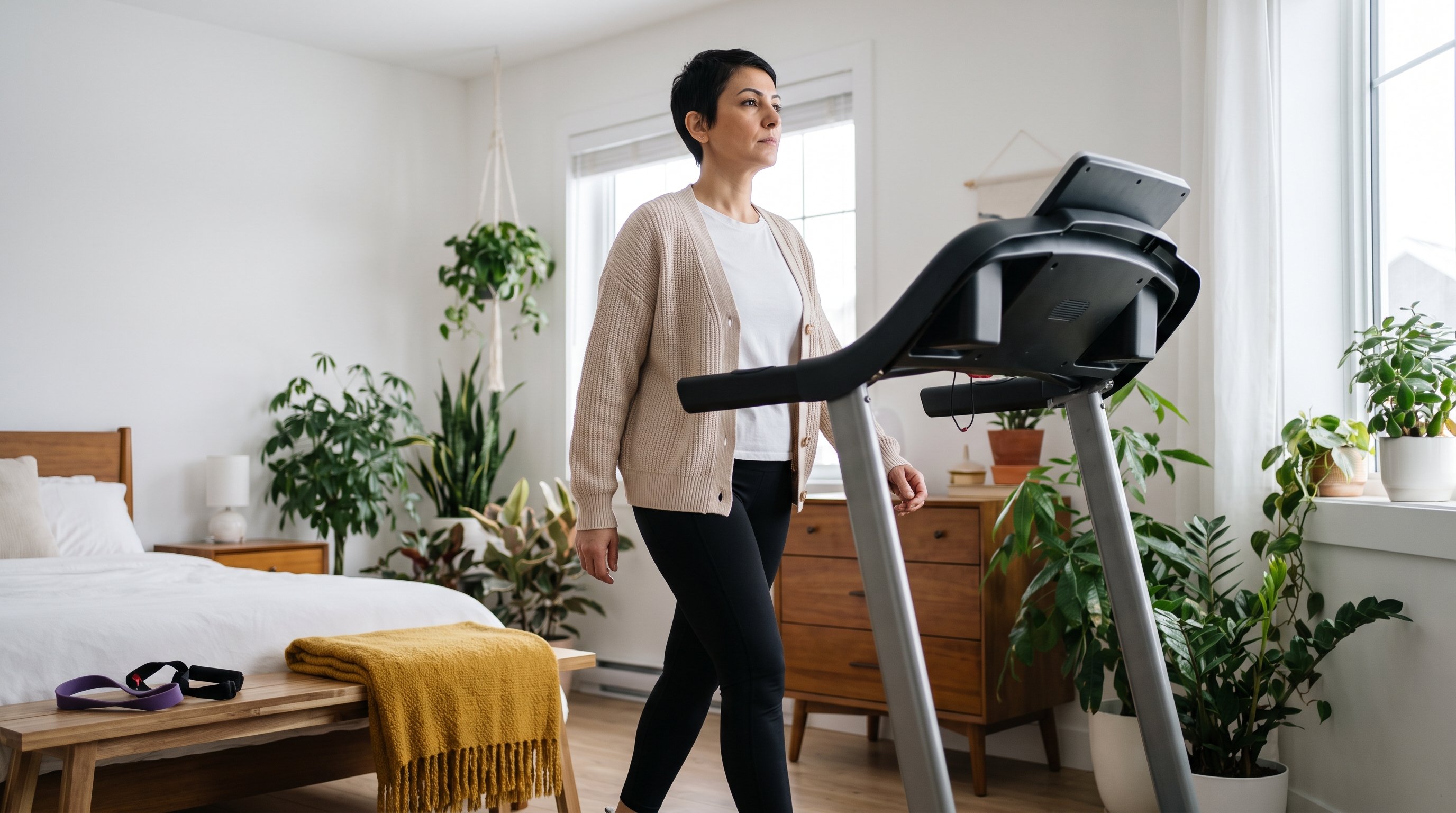
The 12-3-30 workout involves walking on a treadmill with an incline, at a moderate pace, for 30 minutes. It works because it turns ordinary walking into a harder cardio session without any running, jumping or equipment beyond a treadmill.
The incline forces your legs and lungs to work the way they would on a steep hill, so your heart rate climbs even though you're moving at a walking pace.
This guide covers whether it actually works, how often to do it, what beats harder alternatives about it, how to fit it into a real week, and the mistakes that quietly stall progress.
Does the 12-3-30 Workout Actually Work?
Yes, in the sense that it burns calories and builds cardio fitness, because walking uphill at a steady pace for 30 minutes asks more of your body than walking flat ever does.
The incline is doing the heavy lifting here. A steep grade forces your calves, hamstrings and glutes to work harder with every step, which is why extended sessions can feel closer to a jog than a stroll.
Weight loss still comes down to the same arithmetic it always does: calories burned versus calories eaten over time. The incline-walking workout is one way to raise the burned side of that equation - it's not a shortcut around it, and no single workout changes where fat comes off your body.
How the Incline and Pace Actually Work Together
The two numbers in this workout aren't random, and each one does a different job.
The Incline Does the Work a Faster Pace Would Otherwise Do
Instead of speeding up to raise your heart rate, you tilt the treadmill, which loads your leg muscles more per step without the joint impact that comes with running.
The Walking Pace Keeps It Sustainable
A walking speed is brisk but sustainable for most people, which is what lets you hold the incline for the full duration instead of burning out early.
Put together, you get a longer, steadier cardio session than most people could manage at a sprint, which is the entire point.
How Often Should You Do the 12-3-30 Workout
Most people doing this workout aim for somewhere between three and five sessions a week, leaving rest days in between for legs that are working harder than they're used to.
Starting Lower Than Full Intensity Is Fine
If the full intensity feels like too much on day one, a lower incline or a shorter time still counts as progress, and you can build up from there.

The table below gives a rough starting structure, but your own fitness and schedule should always decide the final numbers.
| Stage | Incline | Duration | Frequency |
|---|---|---|---|
| Week one | Lower incline | 15 to 20 minutes | 3 sessions |
| Week two to three | Moderate incline | 20 to 25 minutes | 3 to 4 sessions |
| Week four onward | Higher incline | 25 to 30 minutes | 3 to 5 sessions |
| Rest days | Flat walk or off | Optional light walk | 2 to 4 per week |
Why Walking Uphill Beats Running for Consistency
Running burns calories fast, but it also asks more of your joints, your recovery time and, for a lot of people, your motivation to show up again tomorrow.
Incline walking trades some of that speed for something that's easier to repeat: a walking pace almost anyone can sustain, on a schedule almost anyone can stick to.

A workout you actually finish and repeat beats a harder one you dread and skip, and that's really the whole argument for this method over running intervals.
Fitting Incline Walking Into a Week That's Already Full
Thirty minutes on a treadmill is easier to find time for than it sounds, especially if it replaces something passive like scrolling or watching one more episode.
Pairing it with a podcast, a show or a call means the time doesn't feel wasted, and that's often the difference between a habit that sticks and one that fades after a fortnight.
Keeping track of your sessions, your steps and how your weight is trending can make the difference between guessing and knowing whether it's working, which is where K-Diet's progress tracking comes in handy alongside the walking itself.
Can 12-3-30 Target Fat in One Area? The Honest Answer
No. Walking on an incline doesn't choose where your body loses fat from, no matter how much the workout seems to target your legs or your core.
Your body decides where fat comes off based on its own patterns, not on which muscles did the work that day - that's true of this workout and every other one.
The honest answer is that incline walking helps create a calorie deficit and builds cardio fitness, and the rest follows its own timeline that no treadmill setting can speed up.
What Changes the Result You Get From Incline Walking
Not every session delivers the same return, and three things matter more than the others.
The Factors That Matter Most
- Consistency over weeks, not single sessions - one tough treadmill walk changes very little; showing up three to five times a week for a stretch of months is what moves the needle.
- What you eat the rest of the day - thirty minutes of walking can't outpace a calorie surplus from meals, so the two have to work together.
- Gradually increasing incline or duration - your body adapts to the same incline and pace over time, so nudging one of the numbers up every few weeks keeps the workout challenging.
Mistakes That Quietly Undo an Incline Walking Routine
Jumping Straight to Maximum Intensity
Starting at the full settings before your legs are ready often ends in sore joints and a skipped week; build up gradually instead.
Holding the Handrails the Whole Time
Gripping the rails takes weight off your legs and quietly lowers how hard you're actually working, so let go once you're steady.
Doing It Every Single Day With No Rest
Daily sessions at a steep incline wear down the same muscles with no recovery, so build in rest or flat-walk days.
Ignoring Food Because the Workout Feels Hard
A tough session can create a false sense that eating doesn't matter that day; a sustainable deficit needs both sides handled.
How K-Diet Supports an Incline Walking Habit
A treadmill session is only one part of a day, and what happens around it - meals, water, sleep, rest - decides whether the habit lasts.
K-Diet brings together a meal plan built around food you already like, step and water tracking, guided workouts if you want variety beyond the treadmill, and nutrition guides, so the walking habit sits inside a bigger picture instead of standing alone.
That matters because the app is built on the idea that restriction rarely lasts, but a plan that fits your actual week usually does.
Eat Korean, Lose Weight
Your Korean Diet Plan
Making Incline Walking a Habit That Outlasts Motivation
Pick a time of day you can actually protect - most people find mornings or evenings easier to defend than a lunch break that keeps getting hijacked.
Start lower than full intensity if you need to, track your sessions somewhere you'll actually see them, and let K-Diet help hold the meal and habit side steady while the treadmill does the cardio side.
FAQ
It can contribute to a calorie deficit, but what you eat matters just as much as the workout itself. Pairing it with a sensible meal plan tends to work better than relying on the treadmill alone.
Start with a lower incline and build it up gradually over several weeks. There's no rule that says you have to hit maximum settings on day one.
Yes, a treadmill with incline capability is needed to perform this workout consistently, since outdoor hills rarely hold a steady grade for extended periods. If you don't have access to one, other incline-free cardio walking still builds fitness, just differently.
Track your sessions, your weight trend and how your energy feels over several weeks rather than day to day. K-Diet's progress tracking keeps steps, water and weight in one place, so the trend is easier to see than to guess at.
Share this post