Leg Workout At Home: The Honest Guide To Getting Stronger
By:Author:K-Diet Editorial
Updated on:October 18, 2026

- Building a Leg Workout at Home Step by Step
- How Many Leg Workouts a Week Actually Help
- Fitting Leg Day Into a Week That's Already Full
- A Four-Week Plan to Start Training Your Legs
- When Leg Strength Starts to Feel Different
- Mistakes That Undo a Home Leg Routine
- Letting Fitness Tracking Support Your Leg Workout Routine
- Making Leg Strength Part of a Normal Week
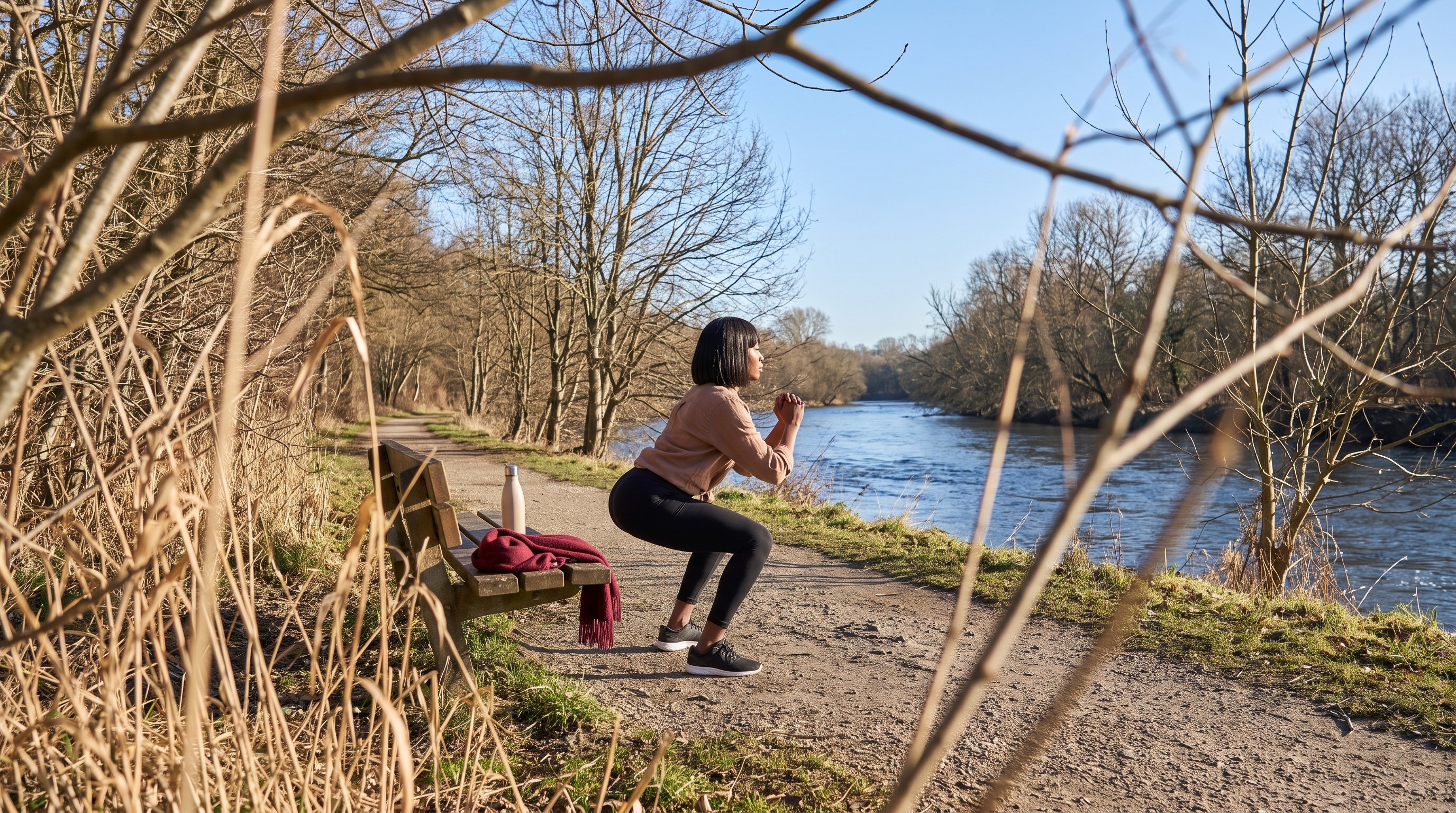
A leg workout at home works just fine as long as you use your bodyweight to create enough resistance - squats, lunges, step-ups and single-leg holds all do the job without a single dumbbell.
Muscles grow and get stronger when they're asked to do more than they're used to, not because of where the resistance comes from. A chair, a staircase and your own bodyweight can push your legs just as hard as a gym machine, especially when you're starting out.
This guide covers the exact steps to build a session, how often to train, a simple four-week starting plan, the mistakes that quietly stall results, and where fitness tracking fits if you want the rest of your habits tracked in one place.
Building a Leg Workout at Home Step by Step
You don't need a complicated routine to get a real training effect. Follow this order and you'll hit the major leg muscles without any equipment.

A Simple Home Leg Session
- Warm up for 3-5 minutes - march on the spot, do a few bodyweight squats, and loosen up your ankles and hips
- Bodyweight squats - 3 sets of 10-15, focusing on sitting your hips back rather than just bending your knees
- Reverse lunges - 3 sets of 8-10 per leg, keeping your front knee tracking over your foot
- Step-ups on a stair or sturdy chair - 3 sets of 8-10 per leg, driving through the whole foot
- Glute bridges - 3 sets of 12-15, squeezing at the top for a second
- Calf raises - 2-3 sets of 15-20, holding onto a wall for balance if needed
- Cool down with a short stretch - 2-3 minutes on the quads, hamstrings and calves
That's the whole session. Add a few seconds of rest between sets if you need it, and more rest if your legs are still burning from the last round.
How Many Leg Workouts a Week Actually Help
Finding a Frequency That Sticks
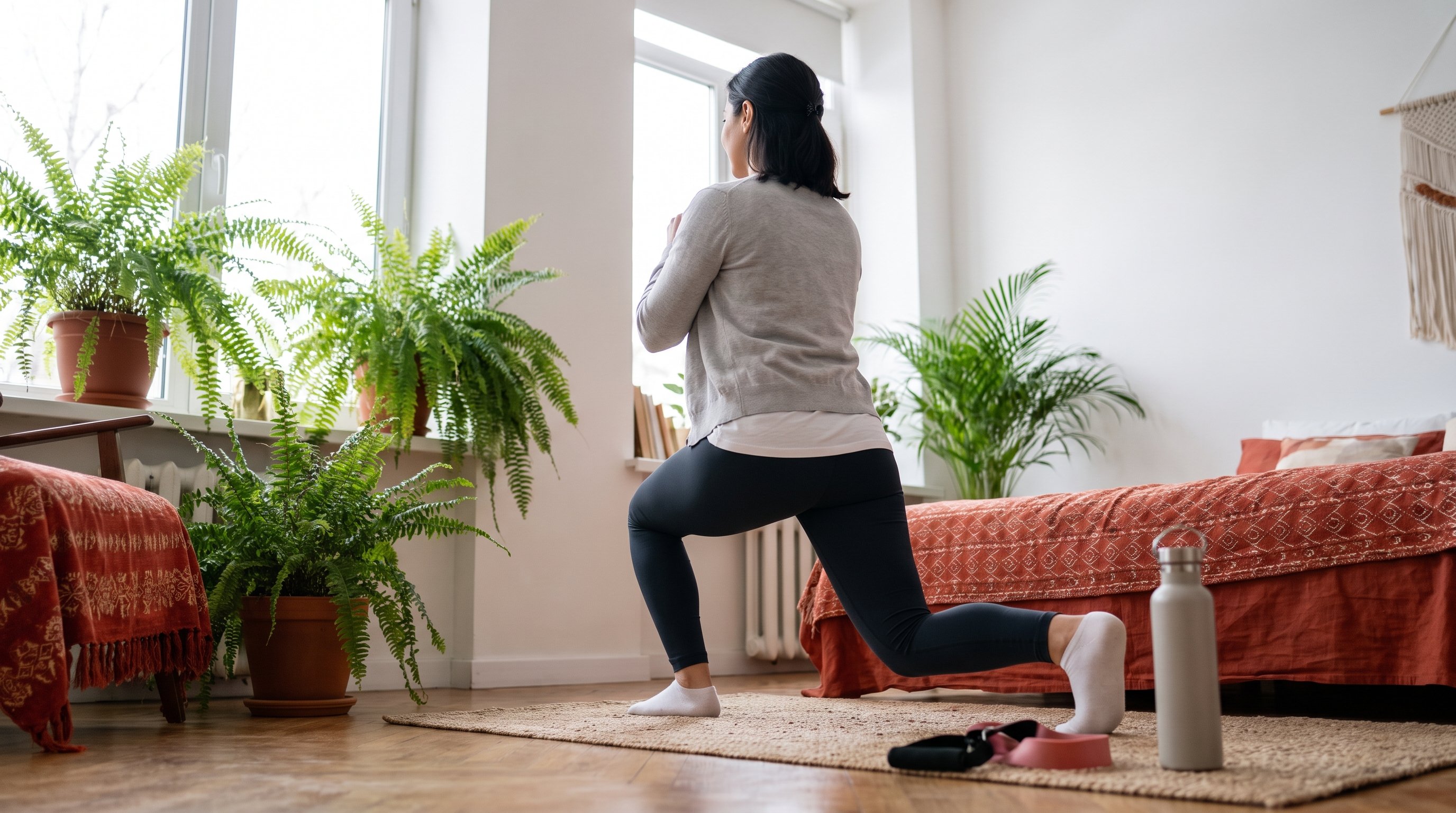
Legs recover faster than people expect, but they still need a day off between hard sessions. Two to three sessions a week is enough to build real strength over time, as long as each one is done with decent effort.
The table below gives a rough starting guide depending on how much time and energy you've got that week.
| Weekly Frequency | What To Expect |
|---|---|
| 1 session a week | Keeps the habit alive, slow progress |
| 2 sessions a week | Steady strength gains over time |
| 3 sessions a week | Faster progress, needs good recovery |
| 4+ sessions a week | Risk of fatigue without rest days |
Fitting Leg Day Into a Week That's Already Full
Most people don't skip leg day because it's hard - they skip it because it's hard to find twenty uninterrupted minutes. The fix isn't more willpower, it's shrinking the session until it actually fits.
A ten-minute version done consistently beats a forty-minute version done once a month. Pair it with something you already do, like right after you brush your teeth or before the kettle boils.
If keeping track of what you've actually done feels like its own chore, guided workouts and progress tracking can hold that information for you, so you're not relying on memory to know whether leg day happened twice this week or not at all.
A Four-Week Plan to Start Training Your Legs
Here's a simple progression that builds week by week rather than throwing everything at you on day one.
| Stage | What To Focus On |
|---|---|
| Week 1 | Learn the moves, 2 sessions, light effort |
| Week 2 | Same moves, 2-3 sessions, add a set |
| Week 3 | 3 sessions, slower reps, more control |
| Week 4 | 3 sessions, add step height or hold time |
The order matters more than the exact numbers - learn the movement first, then add volume, then add difficulty. Rushing that order is how people end up sore for a week and quitting.
When Leg Strength Starts to Feel Different
The first couple of sessions usually just feel awkward - your balance is off, the moves feel unfamiliar, and that's normal. Give it time rather than judging anything from week one.
Stairs start to feel easier before anything looks different, and that's usually the first real sign it's working. This is also roughly where people quit, because the early progress is felt rather than seen, and it's tempting to assume nothing is happening.
Staying consistent through that quiet stretch is the part that actually separates people who keep their strength and those who stop just before it shows.
Mistakes That Undo a Home Leg Routine
Skipping the Warm-Up Entirely
Cold muscles move less efficiently and you'll feel stiffer the next day. A few minutes of light movement first makes the whole session feel more controlled.
Doing the Same Five Reps Forever
If a set of squats stops feeling like any effort at all, your legs have adapted and need something harder. Slow the tempo down, add a pause at the bottom, or raise the step height instead of staying still.
Training Through Sharp Pain
General muscle fatigue is expected, but sharp or joint-specific pain is a sign to stop and rest. Pushing through it usually costs more training time than taking a short break would.
Training Legs Every Single Day
Muscles need recovery time to actually get stronger, not just worked. Two or three sessions with rest days between them beats daily sessions that never let the legs recover.
Letting Fitness Tracking Support Your Leg Workout Routine
A good leg routine is only one piece of the picture - what you eat and how consistent you are matter just as much as the moves themselves.
Keeping Everything in One Place
K-Diet brings guided workouts, step tracking and a meal plan built around food you already like into a single app, so leg day isn't the only habit you're trying to remember. It also includes nutrition guides written to support the training you're already doing, which makes it easier to see the whole week rather than just one workout at a time.

Eat Korean, Lose Weight
Your Korean Diet Plan
Making Leg Strength Part of a Normal Week
You don't need equipment, a gym membership or a huge block of free time to build real leg strength - you need a short routine, a bit of consistency, and the patience to push through the quiet weeks before progress feels obvious.
Pick two or three days this week, block out ten minutes, and run through the steps above. If you want the rest of your habits - meals, steps, water, workouts - tracked alongside it, K-Diet keeps all of that in one app so leg day doesn't have to be the thing you track separately.
FAQ
Yes - muscle growth depends on effort and progression, not on where the resistance comes from. Bodyweight squats, lunges and step-ups can all be made harder by slowing the tempo, adding pauses or raising the step.
Not necessarily - a bodyweight exercise taken close to fatigue creates a similar training effect to a weighted one taken the same distance. The main limitation shows up later, once bodyweight alone stops feeling challenging even at higher reps.
Most of these moves need less than two square metres - squats, lunges and glute bridges can all be done beside a bed or sofa. A chair or bottom stair covers the step-ups, so lack of space is rarely the real barrier.
Pairing the workout with an existing daily habit, like right after breakfast, makes it far easier to keep going when motivation drops. Tools like K-Diet's progress tracking can also help by showing the pattern of what you've actually done, rather than relying on memory alone.
Share this post