Morning Stretches: The Honest Guide To Starting Your Day
By:Author:K-Diet Editorial
Updated on:October 17, 2026
- A Simple Sequence to Follow Before Breakfast
- How Many Minutes a Morning Routine Actually Needs
- Fitting a Short Routine Around a Busy Morning
- A Four-Stage Way to Build the Habit
- When the Habit Usually Starts to Feel Easier
- Mistakes That Derail a Stretching Habit Early
- Building Morning Movement Into a Wider K-Diet Routine
- Making the First Few Minutes Count
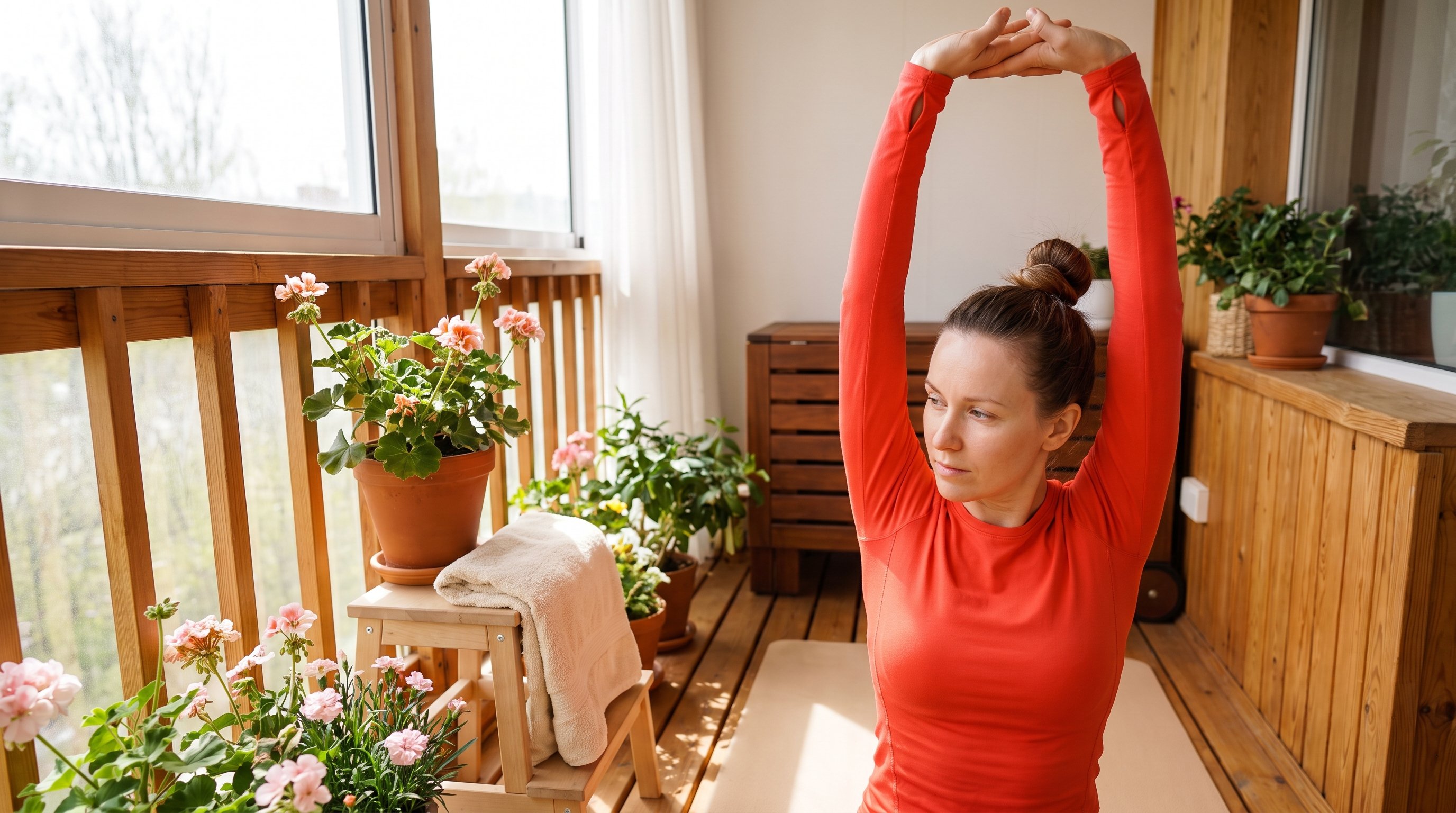
A few minutes of gentle movement after waking loosens stiff joints, gets blood flowing, and makes the rest of the day's activity feel less like a chore. The effect isn't magic - it's mechanical, muscles that have been still for hours simply respond to being asked to move again.
Overnight, your body stays in roughly the same position for hours, which is why things feel tight on waking. Gentle movement increases circulation and nudges joints through their range of motion, which is why the stiffness eases once you get going.
This guide covers how to structure the routine, how long it should take, where it fits around breakfast and the school run, and the mistakes that quietly make people quit by week two.
A Simple Sequence to Follow Before Breakfast
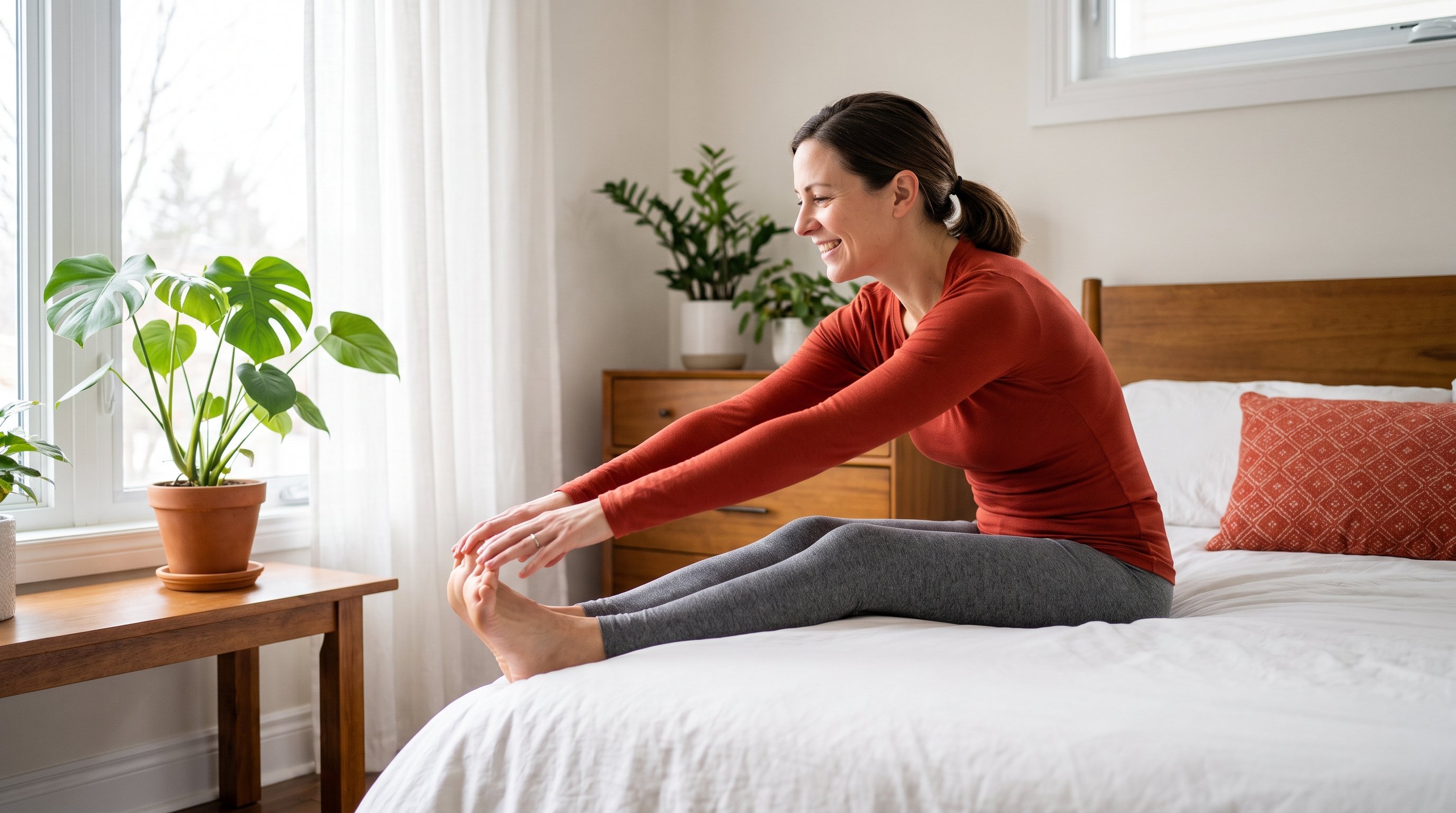
You don't need a mat, equipment, or a spare room to get this done. The sequence below takes a few minutes and works whether you're on carpet, tile, or still half in bed.
A Seven-Step Sequence
- Neck rolls - slow circles both directions to release tension from sleeping position
- Shoulder rolls - roll shoulders back and forward to open up the chest
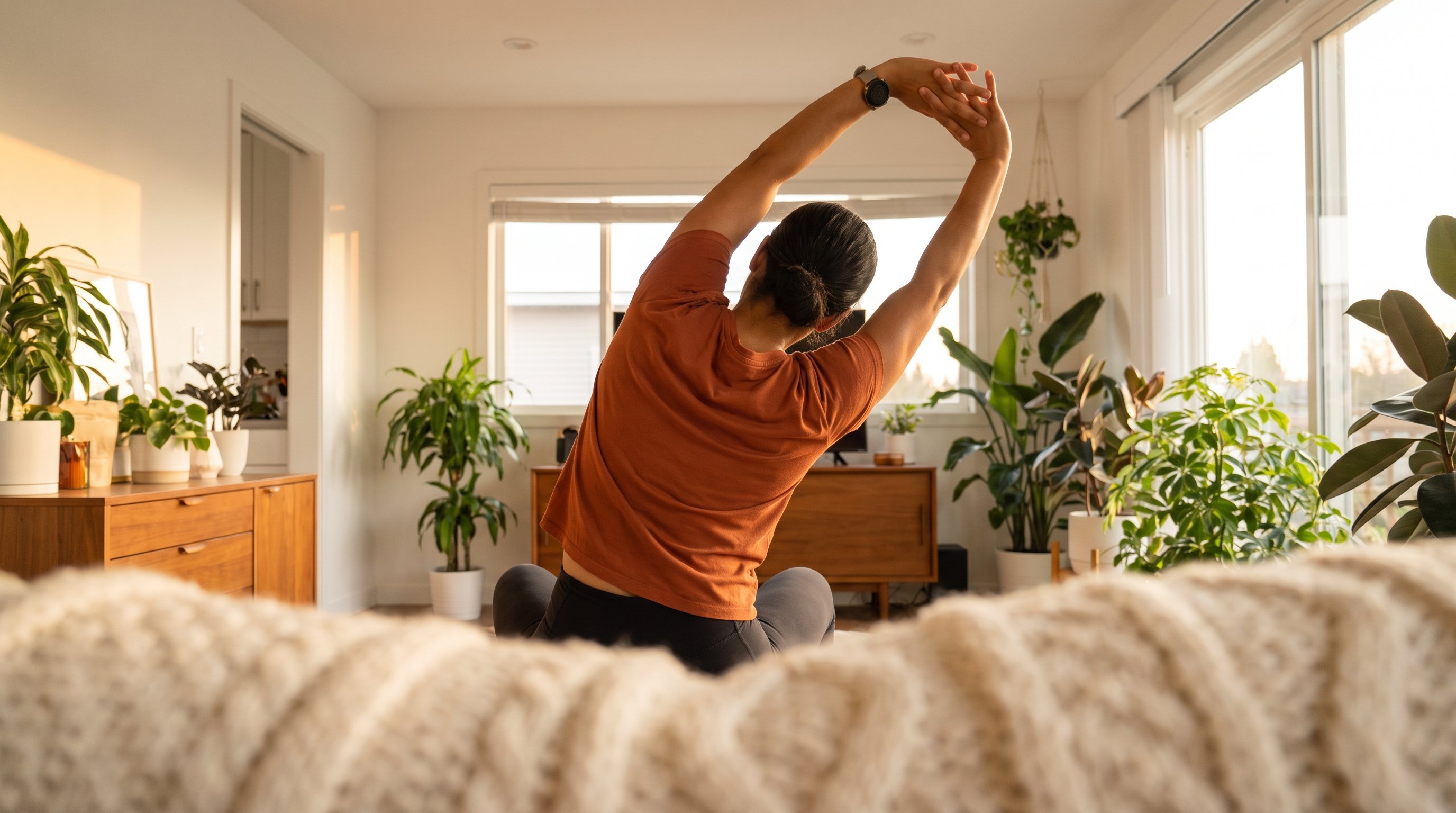
- Overhead reach - stand tall and reach both arms up, lengthening the spine
- Standing forward fold - hinge at the hips and let the arms hang toward the floor
- Cat-cow on hands and knees - arch and round the back to mobilise the spine
- Hip circles - hands on hips, draw slow circles to loosen the lower back
- Standing quad stretch - hold one ankle behind you for a few breaths, then switch sides
Move slowly and breathe through each position rather than rushing to the next one. There's no need to force a deep stretch - a light pull is enough to do the job.
How Many Minutes a Morning Routine Actually Needs
Finding a Realistic Duration
Five to ten minutes is enough to work through a full-body sequence without rushing. Longer sessions aren't automatically better - consistency matters more than duration.
| Goal | Duration | Focus Areas |
|---|---|---|
| Quick wake-up | 3-5 minutes | Neck, shoulders, spine |
| Full-body routine | 8-10 minutes | All major joints |
| Before a workout | 5-7 minutes | Hips, legs, shoulders |
| Desk-bound day ahead | 6-8 minutes | Back, hips, wrists |
Doing this daily beats doing a longer version twice a week. A short routine you actually complete does more for you than an ambitious one you skip.
Fitting a Short Routine Around a Busy Morning
Mornings are tight - breakfast, getting dressed, getting out the door. Attaching the routine to something already automatic, like the kettle boiling, means it happens without needing extra willpower.

Pairing movement with other habits already being tracked - water, steps, sleep - makes it easier to notice when the routine slips. K-Diet's progress tracking keeps water intake, step counts, and daily movement in one place, so a short morning session becomes one more thing you can see adding up rather than something that quietly disappears.
If mornings are genuinely too rushed some days, moving the routine to right after a shower or just before bed still delivers the same loosening effect. The goal is a habit that survives a bad week, not a perfect routine that only survives a good one.
A Four-Stage Way to Build the Habit
Starting small and building up beats trying to do the full routine perfectly from day one. This order works whether you're brand new to morning movement or restarting after a break.
| Stage | Focus | Time |
|---|---|---|
| Stage 1 | Neck and shoulders only | 2-3 minutes |
| Stage 2 | Add spine and hips | 4-6 minutes |
| Stage 3 | Full seven-step sequence | 6-8 minutes |
| Stage 4 | Add a short walk after | 8-10 minutes |
The exact minutes matter less than the order - build the habit first, then build the duration. Skipping straight to stage four usually ends in skipping the whole thing by the second week.
When the Habit Usually Starts to Feel Easier
The first week or two can feel awkward - remembering to do it, figuring out which stretches feel good, working out where in the morning it fits. That's normal and it passes once the sequence becomes familiar.
Most people find the routine starts to feel automatic once it's attached to an existing habit rather than something they have to remember separately. The point where people usually quit is somewhere around the second week, right when it still feels like effort and before it feels like routine.
Sticking with it through that stretch is the part that counts. Nobody can promise exactly when it clicks, but showing up most days gets you there faster than waiting to feel motivated.
Mistakes That Derail a Stretching Habit Early
Treating It As All-Or-Nothing
Skipping the whole routine because there's only two minutes spare undoes the habit faster than doing a shortened version. A quick neck roll and shoulder roll still counts.
Forcing a Deep Stretch Cold
Pushing hard into a stretch before the body has warmed up slightly raises the chance of feeling sore rather than loose. Light and slow beats aggressive and rushed.
Expecting It to Replace Exercise
Stretching loosens joints and eases stiffness, but it doesn't build strength or create a calorie deficit on its own. It's a complement to activity, not a substitute for it.
No Fixed Trigger
Relying on memory alone to start the habit is unreliable on a busy day. Attaching it to something that already happens daily removes the need to remember at all.
Building Morning Movement Into a Wider K-Diet Routine
A stretching routine works best when it's part of a wider pattern rather than an isolated five minutes. K-Diet brings together guided workouts, yoga exercises, and meditation guides alongside the stretching basics, so the morning routine can grow as the habit gets easier.
The app also pairs that movement with a meal plan built around food you already like, so the rest of the day's habits support what the morning started. Nutrition and health guides written by nutrition experts, personal trainers, and psychologists sit alongside the workout library for anyone wanting to understand the reasoning, not just follow steps.
Eat Korean, Lose Weight
Your Korean Diet Plan
Making the First Few Minutes Count
A short routine done daily beats an ambitious one done occasionally - pick the version you'll actually finish tomorrow. Start with two minutes if that's what fits, and let the rest build from there.
K-Diet's tracking tools and workout library are there if you want the habit to grow into something bigger over time. For now, the only real task is doing the first stretch tomorrow morning.
FAQ
On its own, no - stretching doesn't create a calorie deficit or burn meaningful energy. It's useful as a way to ease into movement and make the rest of the day's activity feel more comfortable.
Simple doesn't mean pointless - loosening stiff joints and easing tension takes only a few minutes and has an immediate, noticeable effect. The value is in doing it consistently, not in how complicated the routine looks.
Attaching a two-minute version to something already happening, like the kettle boiling or brushing teeth, removes the need to find extra time. Even a shortened routine most days beats a full one occasionally.
It helps with the consistency side more than the stretching itself - K-Diet keeps movement, water, and steps logged in one place so the habit is easier to see and stick with. The stretching stays simple either way.
Share this post