Healthy Cooking: A Realistic Guide To Eating Well At Home
By:Author:K-Diet Editorial
Updated on:October 18, 2026

- The Myth That One Clean Ingredient Fixes Your Diet
- How Home Cooking Changes What Ends Up on Your Plate
- What Actually Determines Your Results From Cooking
- What a Realistic Week of Home Cooking Looks Like
- Fitting Meal Planning Into a Week That's Already Full
- When a Home Cooking Habit Starts to Feel Normal
- Mistakes That Quietly Undo a Home Cooking Habit
- Letting K-Diet Carry the Planning Side of Healthy Cooking
- Making Home-Cooked Meals a Normal Part of Your Week
Healthy cooking just means preparing food yourself with ingredients you control, instead of relying on meals someone else seasoned, fried or portioned for you. That control is the whole mechanism - it lets you manage what goes into the pan without guessing.
When you cook at home, you decide the oil, the portion and the amount of salt or sugar. Restaurant and packaged meals make those decisions for you, usually leaning heavier on all three.
This article covers what the myths get wrong, how home cooking actually changes your results, what a realistic week looks like, and the mistakes that quietly derail people before the habit sticks.
The Myth That One Clean Ingredient Fixes Your Diet
There's no single ingredient - not kimchi, not green tea, not bone broth - that cancels out the rest of what you eat. Food doesn't work in isolation like that.
The body processes your whole day, not one dish. A nutrient-dense side added to a plate that's otherwise heavy in fried or processed food doesn't offset it.
What actually matters is the pattern across most of your meals, most weeks. Healthy cooking works because it changes many small decisions at once - portion, oil, sauce, salt - not because one food item is doing something special.
How Home Cooking Changes What Ends Up on Your Plate
Two things shift when you move from eating out to cooking at home: what's in the food, and how much of it lands on your plate.
Controlling the Hidden Extras
Restaurant cooking often uses more oil, sugar and salt than home cooking because those three things make food taste better fast and cheaply. Cooking it yourself means you choose the amount, even if you still use all three ingredients.
Setting Your Own Portions
Plated meals from a kitchen you don't control are sized for taste and value, not for any particular goal of yours. At home, you decide how much rice, protein and vegetable goes on the plate before you even sit down.
Together, those two changes are the entire mechanism. Nothing about chopping your own vegetables burns extra energy - the benefit comes from the decisions you get to make along the way.
What Actually Determines Your Results From Cooking
Not every home-cooked meal delivers the same outcome. Three things decide whether cooking at home actually changes anything for you.
What Changes the Result
- How often you cook versus order in - one home-cooked meal a week barely shifts the pattern; five or six starts to matter.
- What fills half the plate - vegetables and protein crowding out refined carbs changes the meal more than any single swap.
- How much oil and sauce you add out of habit - the same stir-fry can double in calories depending on how heavy the hand is with the bottle.
What a Realistic Week of Home Cooking Looks Like
A workable week doesn't mean cooking three meals a day from scratch. Here's a simple version most people can actually hold.
A Week You Can Copy
- Monday to Friday breakfast - something quick like eggs, plain yoghurt with fruit, or leftover rice with vegetables.
- Weeknight dinners - one simple protein, one vegetable side, and a modest portion of rice or noodles, cooked in under 30 minutes.
- One batch-cooked base - a pot of soup, stew or grains made once and reused across two or three meals.
- One or two flexible meals - eating out or ordering in without guilt, because the rest of the week carries the pattern.
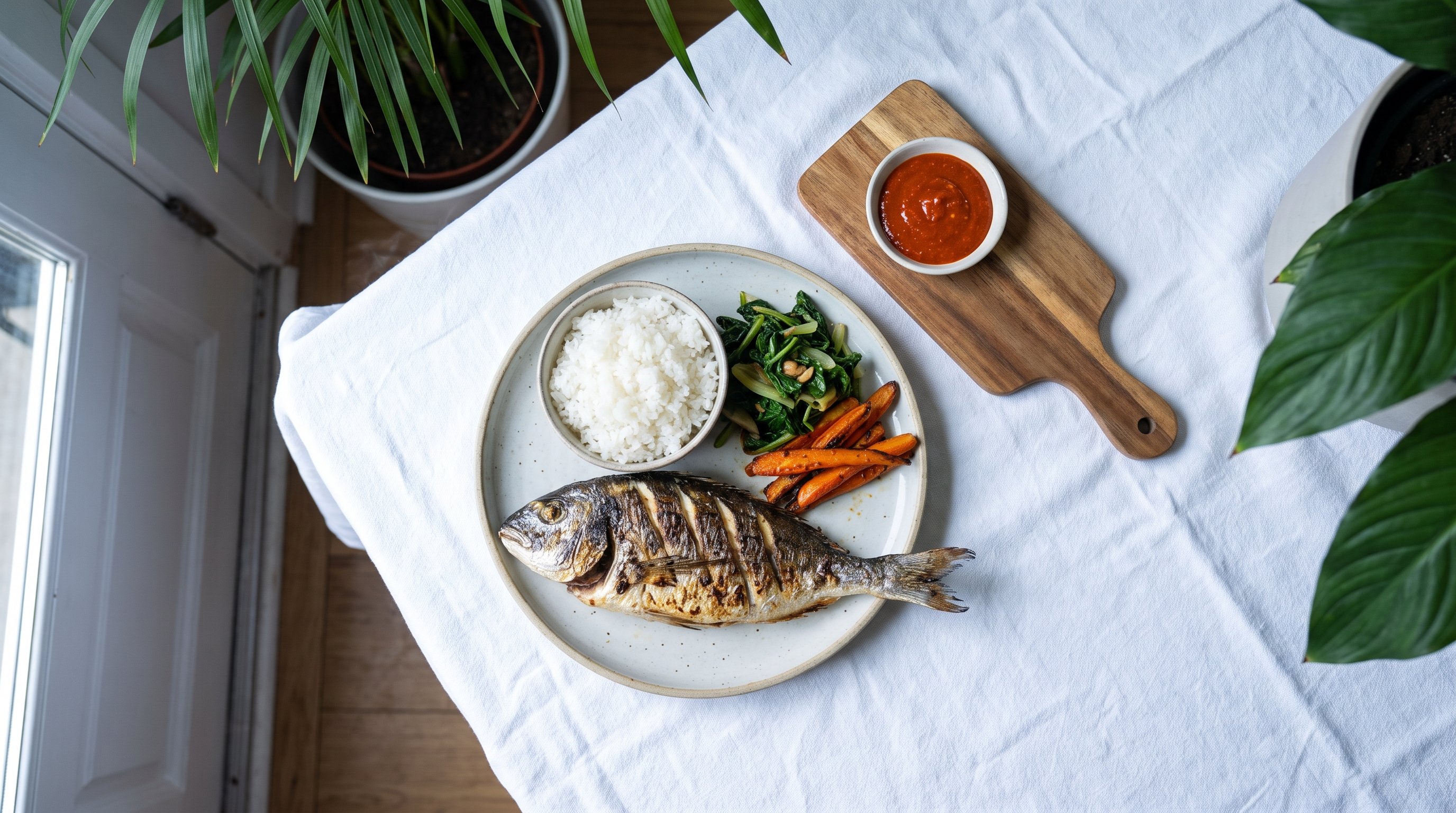
Notice there's no meal in there that takes hours. The pattern holds because most of the week is simple, not because every meal is elaborate.
Fitting Meal Planning Into a Week That's Already Full
The biggest barrier to cooking at home isn't skill - it's deciding what to cook after a long day with no plan in place.
That's where having a plan already written out helps. A customized recipe library gives you a meal plan tailored for you, so the decision is already made before you open the fridge.
You're not inventing dinner from scratch every evening - you're picking from a plan built around food you already like, which removes the decision fatigue that usually sends people toward ordering in.
When a Home Cooking Habit Starts to Feel Normal
The first couple of weeks of cooking more often tend to feel like extra effort, mostly because you're still working out what to buy and how to time it.
That slows down once you settle on a small rotation of meals you know how to make without thinking. There's no fixed point where it suddenly becomes easy - it's gradual, and it depends on how often you actually cook, not how long you've been trying.
Expect the planning itself to get faster long before the cooking does. Once a handful of go-to meals exist, grocery shopping and decision-making shrink to a fraction of what they were at the start.
Mistakes That Quietly Undo a Home Cooking Habit
Cooking Elaborate Meals Every Single Night.
Ambitious recipes on a weeknight are the fastest way to quit by Thursday. Keep most weeknight meals simple and save anything involved for a weekend.
Treating Oil and Sauce As Unlimited.
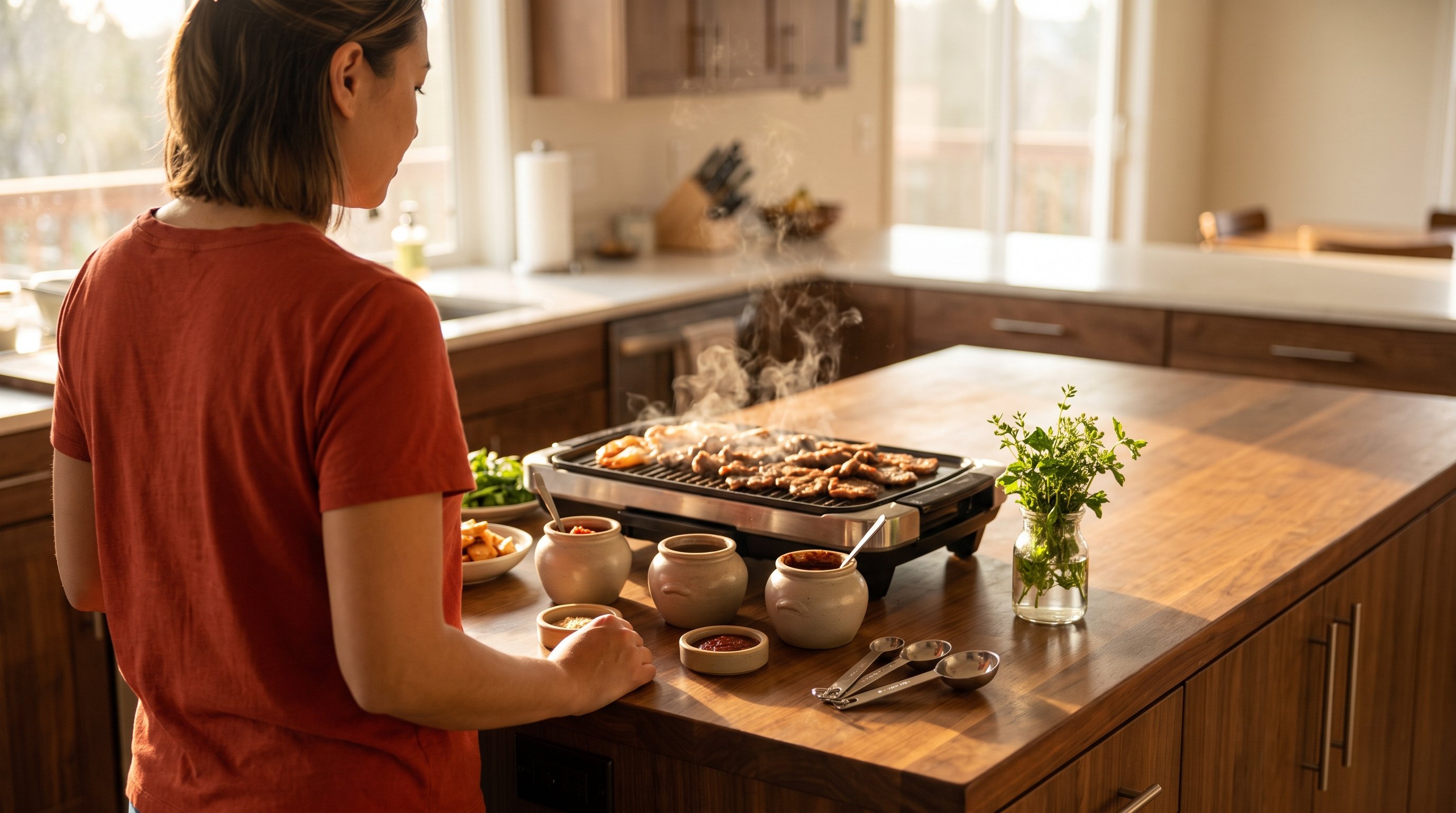
Home cooking only helps if you also notice how much fat and sugar you're adding out of habit. Measuring it a few times until it becomes a feel for the right amount fixes this fast.
Shopping Without Any Plan at All.
Walking into a shop hungry with no list usually ends with whatever's quickest, not whatever fits your week. A short list based on a few planned meals solves most of this.
Giving Up After One Bad Week.
A burnt dinner or a skipped meal doesn't undo the pattern - it's one data point in a much longer run. The habit is built across months, not any single evening.
Letting K-Diet Carry the Planning Side of Healthy Cooking
Most of the friction in home cooking isn't the cooking - it's the deciding, the shopping and the tracking of whether it's actually working.
K-Diet handles that side of it. The app pairs Korean-inspired recipes with progress tracking and water intake, weight and step tracking, so you can see whether the pattern you're building is holding up over time, not just guess at it.
It also includes nutrition and health guides alongside guided workouts, so cooking at home sits inside a wider set of habits rather than standing alone. Start K-Diet Today to turn a loose idea about eating better into a plan you can actually follow.

Eat Korean, Lose Weight
Your Korean Diet Plan
Making Home-Cooked Meals a Normal Part of Your Week
Healthy cooking isn't about perfect meals or rare ingredients - it's about who's deciding what goes on the plate, meal after meal.
Pick two or three simple meals to repeat this week, and let a meal planning tool handle the planning underneath while you focus on actually cooking them.
FAQ
It can, because it hands you control over portions, oil and salt that restaurant or packaged meals usually decide for you. That control only matters if it's applied across most meals, not just once in a while.
No single meal undoes a pattern built across a week or a month. One or two flexible meals a week fit comfortably alongside a mostly home-cooked routine.
A realistic week leans on quick weeknight meals and one batch-cooked base rather than elaborate cooking every evening. K-Diet's recipe library is built around meals that fit a busy schedule, so the plan doesn't assume hours of free time.
There's no fixed point - it depends on how often you cook and how quickly you settle on a small rotation of go-to meals. Planning tends to get easier well before the cooking itself feels automatic.
Share this post