High Fiber Breakfast Foods: The Honest Guide
By:Author:K-Diet Editorial
Updated on:October 18, 2026

- The Myth That One Breakfast Food Fixes Everything
- Why Fiber-Rich Mornings Actually Change How You Feel
- What Changes How Much Fiber Your Breakfast Delivers
- What a High Fiber Breakfast Plate Looks Like
- Making Fiber-Rich Breakfasts Work on Busy Mornings
- When a Fiber-Rich Breakfast Habit Starts to Pay Off
- Mistakes That Undercut a High Fiber Breakfast
- Building Breakfasts Around K-Diet's Recipe Library
- Making the Switch to Fiber-Rich Mornings Stick
High fiber breakfast foods are things like oats, whole fruit, beans, chia seeds and wholegrain bread - foods that keep their fiber intact instead of having it stripped out during processing.
Fiber slows down digestion, so food leaves your stomach more gradually and blood sugar rises less sharply after you eat it. That's the whole mechanism - nothing mystical, just physics and chemistry working in your favour before 9am.
This guide covers what actually counts as high fiber, how it works in your body, what a realistic breakfast looks like, and the mistakes that quietly undo a good routine.
The Myth That One Breakfast Food Fixes Everything
No single breakfast food melts fat, resets your metabolism overnight, or works some kind of magic while you sleep. The body doesn't store fat in a way that any one food can selectively target, no matter how fiber-rich it is.
What fiber actually does is help you feel fuller for longer and smooth out energy dips, which makes it easier to eat a reasonable amount across the whole day.
That's a real, useful effect - it's just not instant and it's not a cure for anything. The honest answer is that a high fiber breakfast is one small lever in a day of choices, not a shortcut around the rest of them.
Why Fiber-Rich Mornings Actually Change How You Feel
Fiber works through two separate routes, and a good breakfast usually uses both at once.
Fiber Slows Digestion so Fullness Lasts Longer
Soluble fiber, found in oats, chia seeds and fruit, absorbs water and turns gel-like in your gut, which slows how fast your stomach empties. That gradual pace is why a bowl of oats tends to hold you over longer than a bowl of cereal with the same number of calories.
Fiber Adds Bulk Without Adding Many Calories
Insoluble fiber, found in wholegrain bread, bran and the skins of fruit and vegetables, passes through mostly undigested and adds volume to meals. More volume for the same calorie count means a breakfast that physically fills you up, which matters when you're trying to hold a calorie deficit without feeling deprived.
Put together, these two effects explain why high fiber breakfasts tend to reduce how much people reach for food mid-morning - not because of anything dramatic, just a slower, steadier release of energy.
What Changes How Much Fiber Your Breakfast Delivers
Not every breakfast labelled healthy actually carries much fiber. Three things decide whether yours does.
Factors That Matter Most
- Whole foods over refined versions - a whole apple keeps its fiber, apple juice doesn't; rolled oats keep theirs, instant flavoured sachets are often stripped and sweetened instead.
- Portion size, not just food choice - a tablespoon of chia seeds scattered on top does far less than a proper serving stirred through the meal.
- Variety across the week - rotating oats, beans, wholegrain bread and fruit covers both soluble and insoluble fiber, rather than leaning on one source and missing the other.
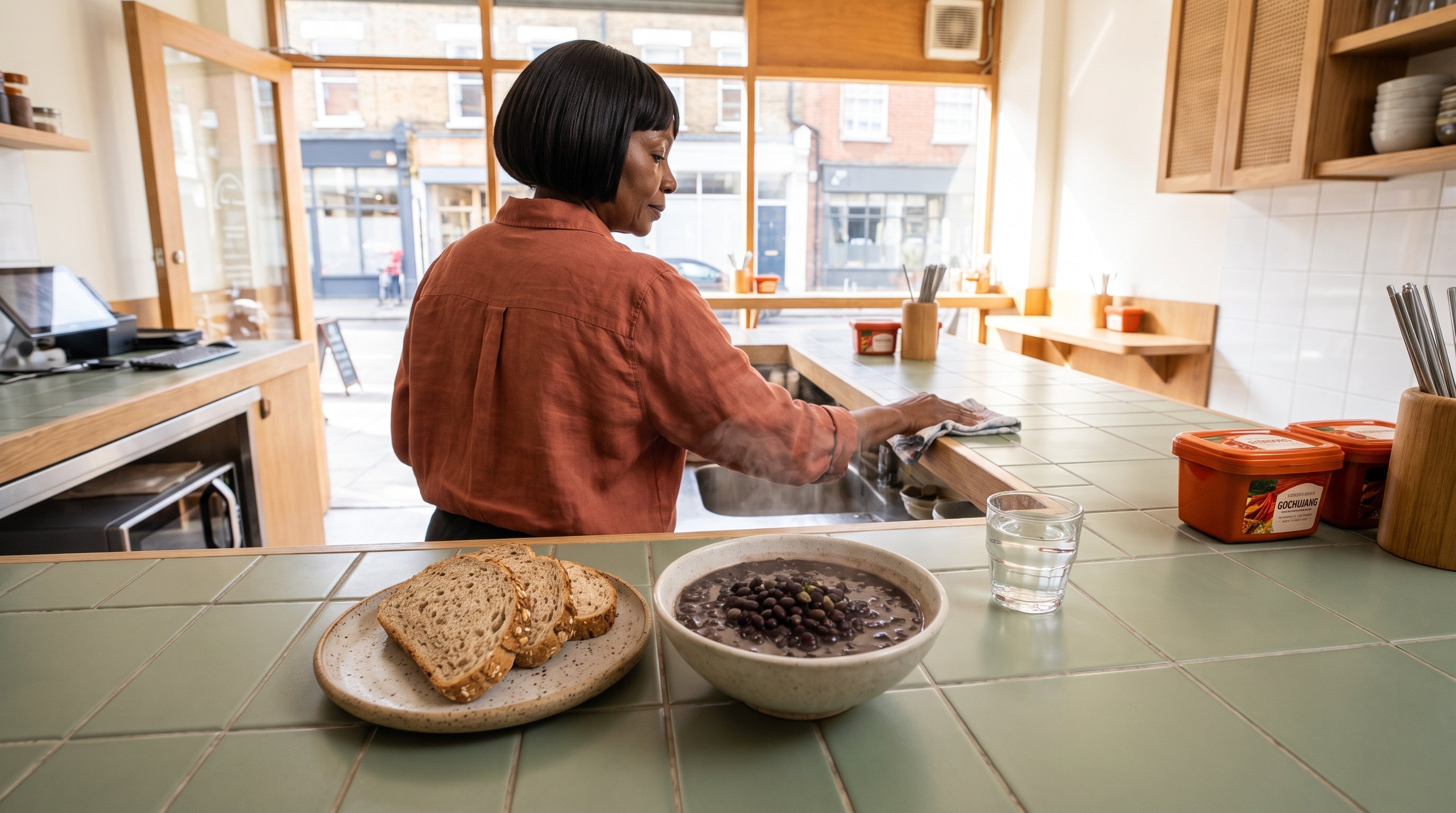
What a High Fiber Breakfast Plate Looks Like
Here's a simple week of breakfasts, mixing different fiber sources so no single morning carries the whole load.
| Day | Breakfast |
|---|---|
| Monday | Oats with berries and chia |
| Tuesday | Wholegrain toast with avocado |
| Wednesday | Scrambled eggs with beans |
| Thursday | Greek yoghurt with pear and oats |
| Friday | Wholegrain wrap with vegetables |
None of these take long to put together, and each one combines at least two fiber sources rather than relying on one ingredient to do all the work.
Making Fiber-Rich Breakfasts Work on Busy Mornings
The biggest barrier to eating a high fiber breakfast isn't knowing what to eat - it's having it ready when you're rushing out the door.
Overnight oats, pre-chopped fruit and tinned beans rinsed and stored in the fridge all remove the morning decision entirely, so the fiber-rich option is also the fastest one.
This is where a meal plan built around food you already like helps, because meal planning tools lay out breakfasts in advance from a library of recipes, so you're not improvising something high in fiber at 7am on a weekday.
When a Fiber-Rich Breakfast Habit Starts to Pay Off
Most people notice the fullness effect within the first week or two - mid-morning hunger shows up later, or not at all.
The harder part is further out, once the novelty of a new routine wears off and old habits like skipping breakfast or grabbing something refined start creeping back in.
There's no fixed point where this becomes automatic for everyone, but sticking with the swap through a few busy weeks is usually what decides whether it lasts.
Mistakes That Undercut a High Fiber Breakfast
Relying on Cereal Boxes That Say "high Fiber"
Some cereals genuinely carry decent fiber, but many lean on added sugar to make up for how processed the grain is. Check what the grain actually is - whole oats or wheat bran beat anything labelled with the word "toasted" or "crunch".
Adding Fiber Too Fast
Jumping from almost no fiber to a huge bowl of bran overnight tends to cause discomfort, because your gut needs time to adjust. Build up the amount gradually over a couple of weeks instead.

Skipping Water Along With the Fiber
Fiber needs fluid to do its job properly, since soluble fiber absorbs water to form that gel-like texture. Keeping a glass of water with breakfast, and tracking intake with nutrition apps, makes the fiber work the way it's meant to.
Treating Breakfast As the Only Fiber Meal
A fiber-rich breakfast followed by two refined meals later in the day won't move the needle much on its own. Fiber works best spread across the whole day, not loaded into one meal and ignored after that.
Building Breakfasts Around K-Diet's Recipe Library
Finding high fiber breakfast foods isn't hard - the harder part is doing it every day without defaulting back to whatever's fastest to grab.
K-Diet pulls from over 1000 Korean diet recipes to build breakfasts around food you'd actually choose to eat, so sticking with a fiber-rich morning doesn't depend on willpower alone.
Pair that with the app's progress tracking for water, weight and steps, and the whole morning routine sits in one place instead of being scattered across memory and guesswork.

Eat Korean, Lose Weight
Your Korean Diet Plan
Making the Switch to Fiber-Rich Mornings Stick
Pick one breakfast from this guide, make it three times this week, and notice how long it keeps you full compared to whatever you usually eat.
That small comparison tells you more than any list of numbers ever could, and it's the kind of habit meal-planning apps are built to support once it clicks.
FAQ
It helps indirectly, by making you feel fuller for longer so you're less likely to overeat later in the day. It's not a direct fat-loss tool on its own - it works alongside a reasonable calorie balance, not instead of one.
Skipping breakfast is simpler in the short term, but it often shifts hunger to later in the day rather than removing it. A fiber-rich breakfast just moves that fullness earlier, which many people find easier to manage.
That's usually a sign of adding too much too quickly rather than a reason to avoid fiber altogether. Increasing the amount gradually and drinking enough water alongside it tends to settle this within a couple of weeks.
Having a plan ready before you're hungry and rushed is what usually keeps a new breakfast habit alive. K-Diet's recipe library and tracking tools exist for exactly that reason - to keep the plan visible instead of letting the busiest mornings decide for you.
Share this post